The 47-Hour Firm
Most firms take 47 hours to answer a new enquiry. The ones that reply in minutes are the ones signing the client.

Every growing firm hits the same wall. The leads that proved your marketing works are now sitting in an inbox nobody has time to chase. Web enquiries, missed calls, Facebook messages, none of it is complicated on its own, but together it's the difference between a lead that signs and one that rings a competitor instead.
Here's the process firms use to fix response time without hiring another receptionist. It doesn't need a rebuilt website or a new front-desk licence, just a clear sequence anyone can copy.
1. Find out how slow you actually are
Before automating anything, spend a week timing your own response. Pull the timestamp on the enquiry and the timestamp on your first reply, for every channel.
- The time between a web form submission and your first reply
- The number of calls that ring out to voicemail, and how many of those callers call back
- Enquiries that sit in an inbox overnight or over a weekend
Most firms are shocked by the gap. The industry average sits at 47 hours, while 78% of buyers choose whoever replies first (caseyresponse.com).
2. Fix the leak that's costing you the most
Don't try to fix every channel at once. Start with whichever one loses you the most leads. For most firms that's the phone: roughly a third of law firm calls go unanswered, and most of those callers never leave a voicemail or call back (Bigger Law Firm Magazine).
Pick one channel, fix it properly, then move to the next.
3. Automate the first reply, not the whole relationship
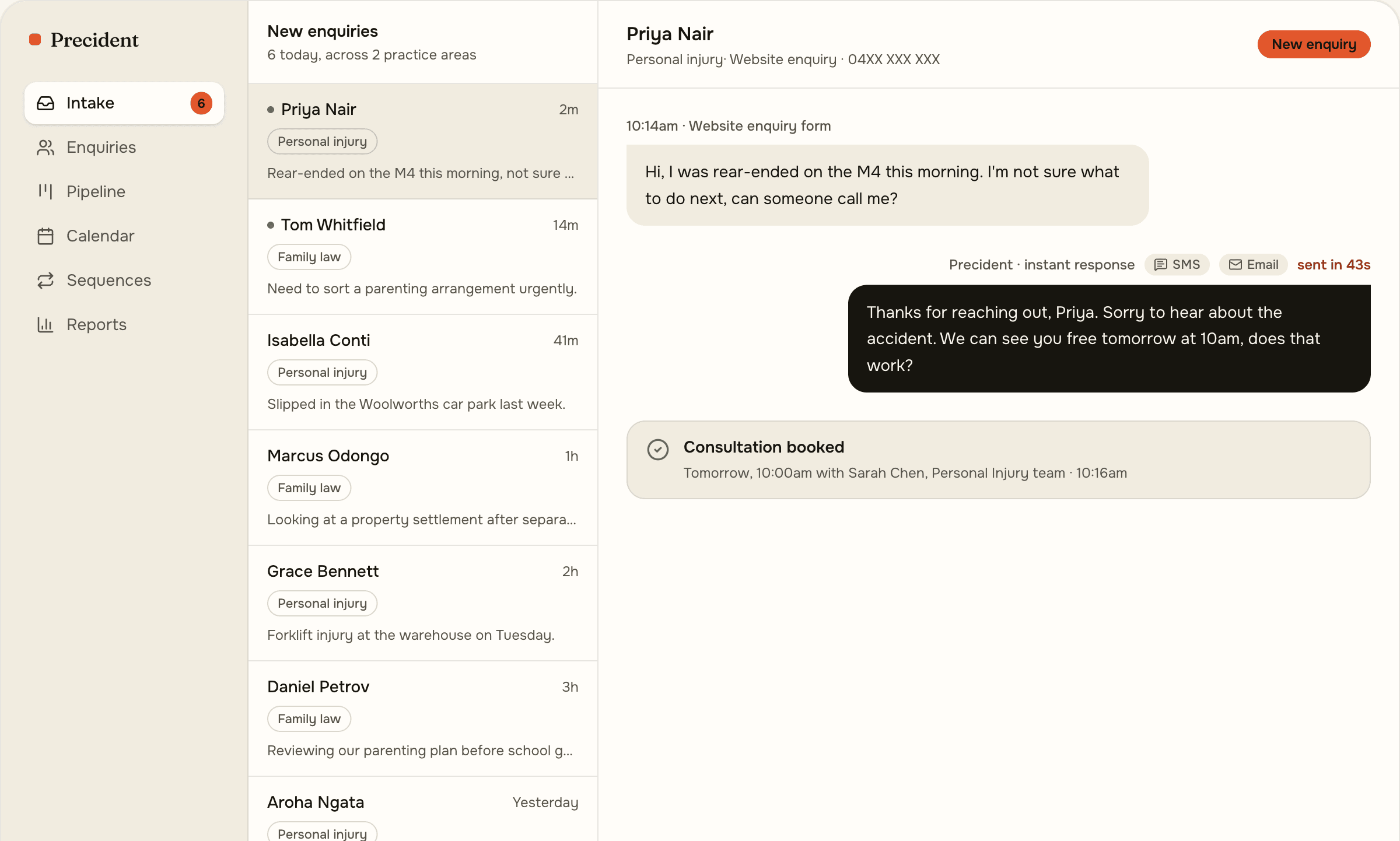
Precident answers the first message in your firm's own voice, in under 60 seconds, then asks the qualifying questions your intake staff would ask anyway.
- Connect the number or form that's leaking leads
- Let it handle the first reply and the qualifying questions
- Check the transcripts yourself until you trust the tone
4. Keep a human on anything that needs judgment
Not every enquiry should run on autopilot. Keep a person across anything sensitive: a distressed caller, a fee query outside your standard range, a matter that needs a solicitor's read before you commit to a time.
- Let routine enquiries book a consult without a person involved
- Escalate anything ambiguous, with the full conversation attached
- Review escalations weekly while you're still building trust in the system
5. Track it, then expand
After a fortnight, most firms can already see it: fewer calls going to voicemail, consults booked same day instead of same week.
- Track response time and show-up rate before and after
- Use the numbers to decide which channel to fix next
- Expand to the next practice area or channel once the first one is proven
Within two months, the firms that do this stop competing on who advertises harder and start winning on who replies first.
Final thoughts
Fixing intake isn't a rebuild. It's a handful of small, provable changes: know your response time, fix the worst leak first, automate the first reply, keep judgment calls with a person.
The lead you already paid for is still on the table. Somebody just has to answer before your competitor does.
Stop losing leads to slow replies. Book a demo